Home Blog

Why Sensei John focuses on core tension in beginner Shotokan karate

Why Sensei John focuses on core tension in beginner Shotokan karate

Key Takeaways

  • Sensei John introduces foundational ninth kyu Shotokan karate covering warm-ups, basic kihon, and stance work.
  • The instructor emphasizes core engagement during straight punching: “Remember to have the center of your body tight, your abs.”
  • Technical instruction covers downward blocks, rising blocks, knife-hand techniques, and precise transitions between zenkutsu dachi and kokutsu dachi.

Foundations of the ninth kyu curriculum

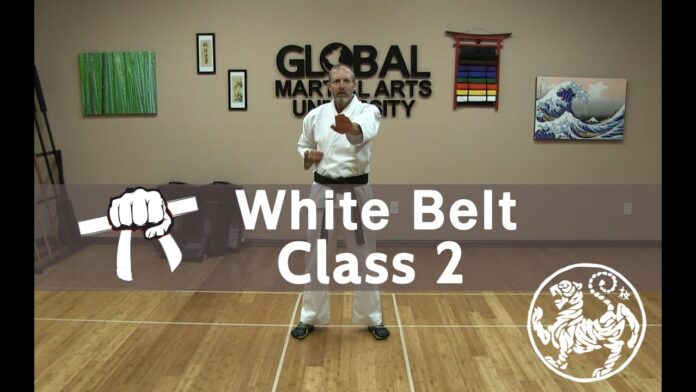
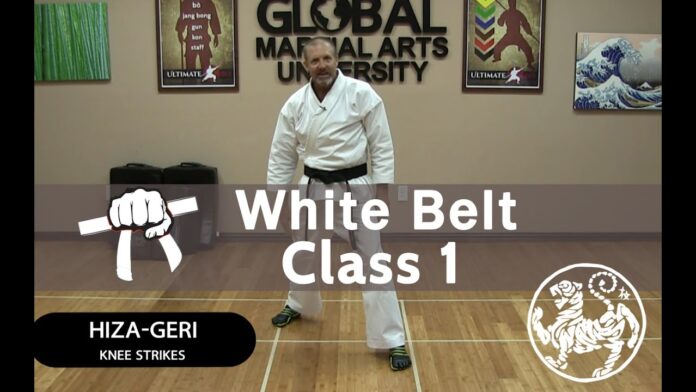
In a structured instructional session presented by the Global Martial Arts University, instructor Hodge-Sensei guides ninth kyu white belt practitioners through fundamental kihon techniques, stances, and body mechanics. Introducing the training, the instructor said, “I’m Sensei John and this is an introductory ninth KU white belt class.” The session builds systematically from functional warm-ups to stationary strikes and complex stepping patterns.

The routine opens with conditioning designed to elevate the heart rate and loosen the joints before technical execution begins. Sensei John introduces basic stride punches, explaining that “we’re punching and jogging at the same time.” The conditioning also incorporates front leg swings and front snap kicks, known as mae geri keage. Demonstrating the kick from zenkutsu dachi, he explained, “Now, what I’m doing is I’m striking with the ball of my foot where I’m going to have my foot extended here.”

Core activation and straight punch mechanics

The technical kihon portion begins with choku-zuki, the basic straight punch. Sensei John breaks down the mechanics into distinct phases before moving into full speed, placing strong emphasis on midsection stability and controlled respiration. Reminding students to remain disciplined during repetitions, he said, “Remember to have the center of your body tight, your abs.”

Expanding on breathing during punching drills, the instructor detailed his internal method for power generation. “I use a little bit of a forced breathing technique and I try to feel it from the lower part of my abdomen into my solar plexus here and visualize that energy coming out through my hand into the target,” he explained to students.

Deflection dynamics in downward and rising blocks

The class transitions into defensive techniques, starting with gedan barai. Rather than viewing the downward block as a static collision, the instructor describes it as a dynamic redirection of incoming force. Demonstrating the finish, he pointed out that “there’s that snap at the end and get on body.” He added, “So, we’re doing a receive and a redirect of whatever strike or whatever’s coming at us.”

Upper-body mechanics receive similar scrutiny during age uke practice. When executing the rising block from shizentai, Sensei John emphasized the subtle articulation required to deflect a strike effectively. “Remember, there’s a little twist, a little turn right here at the top where I’m deflecting that object and concentrating on my energy,” he noted.

Stepping drills and back stance alignment

The session advances into multi-step coordination, moving practitioners from a three-step transition down to single-step execution in zenkutsu dachi. Later in the class, Sensei John introduces shuto uke in renoji dachi before breaking down kokutsu dachi. For the knife-hand block, he detailed his base, stating, “I usually in this stance I put about 80% of my weight on my back leg.”

When demonstrating the geometry of kokutsu dachi, the instructor outlined the initial foot placement and body angle. “I’m going to put my foot at 90 degrees to the direction of my movement,” he explained while guiding students through step-by-step stance transitions. Sensei John concluded the session by cycling through single-step movements in the back stance before finishing with traditional bow etiquette.
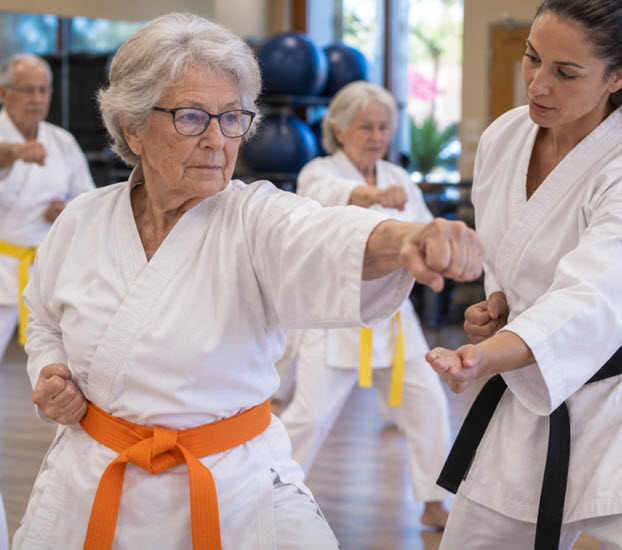
Why seniors in Mesa are trading retirement routines for Shotokan karate

Why seniors in Mesa are trading retirement routines for Shotokan karate

Key Takeaways

  • Seniors at an Optum community center in Mesa began an adaptive Shotokan karate program in April, advancing to yellow and orange belts.
  • Instructor Ilana Obrand, who has practiced karate since age 4 and competed internationally, modified training for older adults despite initial skepticism: “People thought I was nuts for wanting to start this program.”
  • Student Jeanne Young, 70, lost nearly 10 pounds through 3-day-a-week practice and credited the training: “It really helped my mind and my strength, and my balance, I love it so much.”

New martial arts journey begins at an Arizona community center

A group of seniors in Arizona is discovering martial arts late in life, proving that balance, strength and discipline have no age limit. Practicing at an Optum community center in Mesa, the participants began an adaptive Shotokan karate program in April, learning the fundamentals of striking, blocking and body control. By late September, their dedication resulted in their first formal belt tests, where every participating senior successfully advanced in rank.

Among the dedicated students are 80-year-old Claire Charles and 70-year-old Jeanne Young, both of whom had never trained in martial arts before joining the class. When asked whether she had ever engaged in combat before taking up the discipline, Charles responded with a laugh, “Uh, verbally!”

For Young, entering a martial arts dojo caught her relatives completely off guard. “My family is so surprised when I tell them I’m doing karate, ‘You?’ And I say yeah!” Young said, reflecting on their disbelief.

Building strength, balance and focus in everyday life

Rather than treating the sessions as a casual pastime, participants have embraced the physical and mental rigors of training multiple times per week. The routine has already produced noticeable changes in fitness and daily vitality for those attending regularly.

“It really helped my mind and my strength, and my balance, I love it so much, since it started, now we do three days a week. I don’t believe I’ve missed one day,” said Young, who also noted that she has shed nearly 10 pounds since taking up Shotokan in the spring. Those functional physical benefits have carried directly into her chores at home. “I feel stronger, and I have to do a lot of stuff around the house attacking our trees and doing gardening, and attacking the branches I go rawr!”

Adaptive training tailored by an international competitor

The program is led by Ilana Obrand, a fitness specialist at the Mesa community center who has trained in karate since she was 4 years old and previously competed on the international stage. Obrand adapted traditional Shotokan karate to accommodate older adults, focusing on punching, blocking and kicking to develop coordination, mental resilience, flexibility, stress relief and self-defense skills.

Launching the initiative initially raised eyebrows among those unfamiliar with adaptive martial arts. “People thought I was nuts for wanting to start this program,” Obrand admitted.

While adaptive sparring is integrated into the curriculum, live sparring rounds have not yet begun. When contact practice is introduced, participant safety and fall prevention will serve as the guiding principles. “Slower movements, just having more control so they focus on the balance aspect, of the sparing because I don’t want to see anybody falling over,” Obrand explained.

The cohort reached an important milestone on Thursday when every student who tested graduated to a yellow belt. Young performed exceptionally well during the evaluation, bypassing yellow entirely to be awarded an orange belt.

Why Jon Hodge structured 1 white belt Shotokan class around core control

Why Jon Hodge structured 1 white belt Shotokan class around core control

Key Takeaways

  • Sixth-dan black belt Jon Hodge designed the 9th kyu white belt training session to be gentle, advising practitioners, “I want you to train while taking into account your physical condition.”
  • Hodge highlighted abdominal engagement during straight punches, stating, “when we use the center of the body, we move all the stomach muscles, and while directing straight punches, the stomach muscles work, and we must focus on this while performing this exercise.”
  • Explaining upper blocks and stance mechanics, Hodge asked, “what does blocking mean? It means receiving the strike and then redirecting it.”

Foundations for 9th kyu karate practitioners

Stepping onto the tatami for the first time brings both excitement and technical challenges. In an introductory 9th kyu training session presented by the Global Martial Arts University, 6th dan black belt Jon Hodge established a steady rhythm for newcomers transitioning from white belt toward yellow belt. He addressed beginners directly to set expectations, explaining, “we designed this training session to be gentle and easy, and I want you to train while taking into account your physical condition.”

Hodge opened the session with a dedicated warm-up emphasizing breath work and joint mobility. Moving through neck rotations, arm swings, trunk twists, ankle mobility and light conditioning, the instructor underscored the importance of controlled breathing from the start. Instructing students to breathe deeply through the abdomen and chest, Hodge guided the group through jumping jacks, five push-ups, stride punches and core conditioning before initiating martial techniques.

Mastering straight punches and hip mechanics

The technical kihon section began with choku-zuki, or straight punches. Hodge introduced the mechanics methodically, breaking the action into clear components and pairing them with measured respiration. Explaining the power generation behind the strike, Hodge pointed out, “during the execution of this exercise and during the execution of all other exercises, we want to use the center of the body.”

He noted that rotating the punch adds penetration, focusing the impact on the first two knuckles, known as seiken, directed toward the solar plexus. Hodge reminded practitioners, “when we use the center of the body, we move all the stomach muscles, and while directing straight punches, the stomach muscles work, and we must focus on this while performing this exercise.”

Defensive blocks and knee strikes

Moving from striking to defense, Hodge shifted focus to age uke, the upper block. He walked students through crossing the forearms before driving one arm upward with a spiraling motion to redirect incoming energy. Hodge clarified the fundamental purpose of blocking in traditional karate, explaining, “what does blocking mean? It means receiving the strike and then redirecting it.” He cautioned against rushing the movement, telling students, “we will not do the exercise at the same speed as straight punches.”

Kicking basics followed, beginning with knee strikes—hiza geri—delivered from zenkutsu-dachi, the front stance. Hodge highlighted the functional benefits of these repetitions for new students, stating, “this is another exercise to strengthen the legs, and during the exercises of the first levels we will work to strengthen the center of the body and strengthen the legs.” After transitioning through rear-leg front snaps, or ushiro mae geri keage, practitioners practiced gedan barai, the downward block, coordinating inhalations and exhalations with defensive sweeps.

Building stability in zenkutsu-dachi

The lesson concluded with focused stance drills dedicated purely to front stance movement. Using floor guide lines spaced roughly 75 centimeters apart, Hodge demonstrated stepping forward and sliding the moving foot past the stationary leg without compromising posture. He explained, “what we are doing is testing this stance and feeling the legs and feet in this stance.”

He emphasized that proper carriage must be maintained throughout transitions, noting, “we are working to improve the upright posture of the body so that the back remains in a correct position while performing this exercise.” The class wrapped up with full-body stretches targeting the hamstrings and torso, providing a comprehensive entry point for traditional Shotokan fundamentals.

What happened on day 2 of the Karate 1 Series A Salzburg as 6 new champions emerged

What happened on day 2 of the Karate 1 Series A Salzburg as 6 new champions emerged

Key Takeaways

  • Six gold medals were awarded on day two of the 2026 Karate 1 Series A season finale in Salzburg.
  • Patricia Nastas, Nina Kvasnicova, Sami Tas, and Taiki Kataoka claimed individual kumite victories.
  • Kuwait swept Italy 5-0 in male team kata, while Chinese Taipei edged France 3-2 to take the female team kata title.

Action unfolds across kumite and team kata in Austria

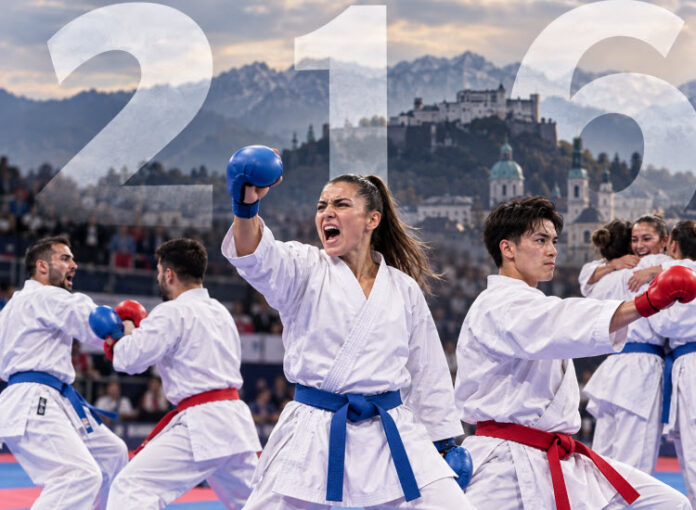
The final event of the 2026 Karate 1 Series A season continued in Salzburg, where 6 more titles were decided on the second day of competition. Athletes from across the globe gathered in Austria for a major celebration of karate, with competitors from Romania, Slovakia, France, Japan, Kuwait, and Chinese Taipei reaching the top step of the podium.

In the female kumite -50kg division, Romania’s Patricia Nastas delivered a commanding performance to take gold, beating Ukraine’s Daria Pylypiuk 8-0. Slovakia’s Nina Kvasnicova claimed the female kumite -55kg title after edging Venezuela’s Yorgelis Salazar 4-2 in a tight final bout.

Close finishes define the male kumite finals

Competitive margins remained razor-thin in the men’s weight categories. France’s Sami Tas secured the male kumite -60kg crown courtesy of a 4-3 triumph over Algeria’s Mohamed Anis Saadi. In the male kumite -67kg showpiece, Japan’s Taiki Kataoka defeated Ukraine’s Nazarii Prannychuk 1-0 in a contest decided by a solitary point.

Team kata also took center stage on day two. Kuwait dominated the male team kata final, sweeping past Italy 5-0 to take the first team title of the day. Chinese Taipei then followed with a hard-fought 3-2 victory over France to secure the female team kata championship.

Salzburg day 2 medal round results

Category Gold Medalist Silver Medalist Final Score
Female Kumite -50kg Patricia Nastas (ROU) Daria Pylypiuk (UKR) 8-0
Female Kumite -55kg Nina Kvasnicova (SVK) Yorgelis Salazar (VEN) 4-2
Male Kumite -60kg Sami Tas (FRA) Mohamed Anis Saadi (ALG) 4-3
Male Kumite -67kg Taiki Kataoka (JPN) Nazarii Prannychuk (UKR) 1-0
Male Team Kata Kuwait Italy 5-0
Female Team Kata Chinese Taipei France 3-2

With 6 titles awarded on the second day, the 2026 Karate 1 Series A Salzburg heads into its final day of action to wrap up the season.

Why an Essex boy and his stepdad credit karate with changing their family life

Why an Essex boy and his stepdad credit karate with changing their family life

Key Takeaways

  • Oliver, 11, and his stepfather Ben took up karate 5 years ago in Suffolk, rising from red to brown belts while deepening their personal bond.
  • Oliver explained that training helped overcome childhood anxiety, saying, “It makes me less anxious and emotional than I would normally be.”
  • The pair are among 7 Arena Karate athletes selected for Team GB at the WTKA World Championships in Italy, with the club fundraising over £10,000 to compete.

A shared journey from beginner belts to international selection

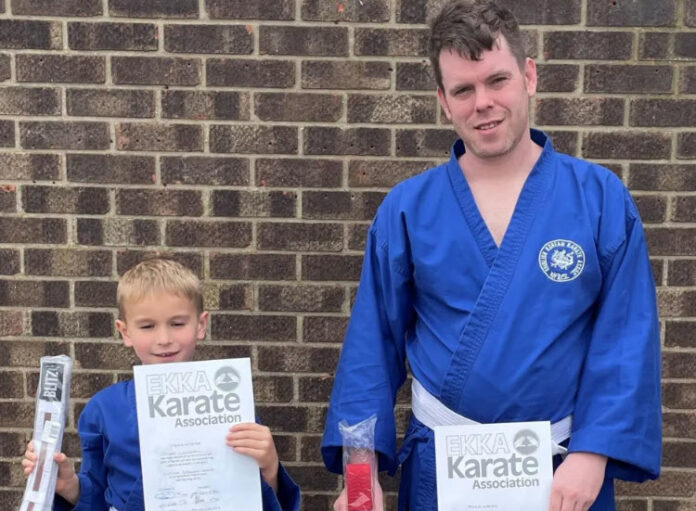
When Oliver and his stepfather Ben decided to take up karate together 5 years ago, they were simply looking for a joint activity. Living in Coggeshall, Essex, the pair joined Arena Karate in Hadleigh, Suffolk, where the discipline soon transformed from a weekly pastime into an obsession that reshaped their home life.

Ben, 37, has been Oliver’s stepdad since the boy was a toddler. As a young child, 11-year-old Oliver struggled with confidence and experienced anxiety. Stepping inside the dojo provided welcoming structure and stability, helping him foster his social skills while learning alongside his father figure. Oliver now assists at weeknight sessions with the Little Dragons, guiding martial artists aged 3 to 7.

“It has given us something to focus on… we compete, train and coach together,” explains Ben, reflecting on their development since their first grading together in May 2022.

Oliver has felt the personal impact of their continuous practice. “I love how the sport builds me up,” Oliver says. “It makes me less anxious and emotional than I would normally be. My mum really notices a difference.”

Climbing the ranks together

While Ben had experimented with martial arts earlier in life, training beside Oliver gave him the motivation to stick with the sport long term. “I had done a few martial arts in the past but this is the only one I have stuck at, mainly because I am doing it with [Oliver],” Ben says. “We have gone all the way from red belt up to the dizzy heights of brown belt now.”

Oliver is quick to point out with a smile that his path was slightly different: “That’s because you skipped all the early belts. I did all the harder ones!”

Their teamwork previously delivered bronze in parent and child kata at the Ipswich Karate Championships in 2023. While Ben initially guided Oliver through foundational patterns, Oliver often reminds his stepdad of upcoming sequences as the routines become more intricate. Ben notes the sport “massively” helps their bond. “We were doing things such as learning to ride a bike but this is something we have been learning together. Hopefully one day, we will reach black belt together.”

Oliver agrees that their time on the mats has cemented their connection, explaining that their “relationship was strong before” but now “it is even stronger”. He adds: “We have a stronger bond than most. It is brilliant.”

Preparing for major championships

The duo are part of a 7-athlete contingent from Arena Karate selected to represent Great Britain internationally. Founded in 1975, the Suffolk club has around 50 members, with its international squad ranging from 11 to 37 years of age.

The team is scheduled to compete at the WTKA GB European Open in Barnsley on 10 October before traveling to Carrara in Tuscany for the WTKA World Championships from 21 to 25 October, an event featuring 2,500 competitors from 75 nations. Ben will enter kumite in the veterans’ bracket, while Oliver will take part in both kata and kumite in his division.

Because karate receives no government funding through UK Sport, families are actively fundraising to meet a target exceeding £10,000 to cover travel and entry costs. Head coach Stefanie Barnes notes that the required sum is “massive” for a small club, adding that while “the athletes have done the hard work on the mats, it is a huge financial hurdle.” Barnes described their work ethic as “fantastic” and said she was “so proud” of them.

Among their clubmates traveling for their first international call-ups are Esmee, 11, Lily, 12, and Lacie-Mae, 14, who will perform a team kata. Lily notes they put in 100% in training, while Lacie-Mae explains: “We have to learn to pace ourselves, so we are in-sync with each other. It takes lots of practise.” Esmee adds: “I have learned lots of moves and techniques. I can’t wait to perform them on the world stage but I’d be lying if I said I wasn’t nervous too!”