
Key Takeaways
- Sixth-dan black belt Jon Hodge designed the 9th kyu white belt training session to be gentle, advising practitioners, “I want you to train while taking into account your physical condition.”
- Hodge highlighted abdominal engagement during straight punches, stating, “when we use the center of the body, we move all the stomach muscles, and while directing straight punches, the stomach muscles work, and we must focus on this while performing this exercise.”
- Explaining upper blocks and stance mechanics, Hodge asked, “what does blocking mean? It means receiving the strike and then redirecting it.”
Foundations for 9th kyu karate practitioners
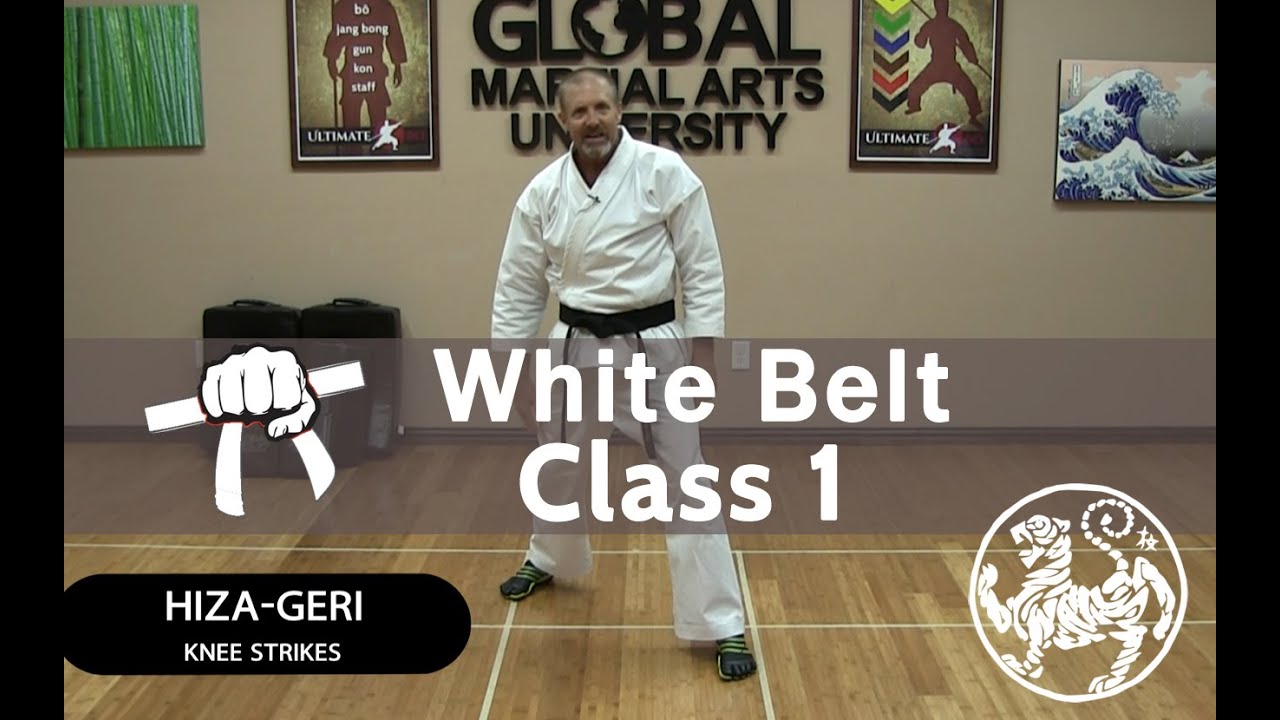
Stepping onto the tatami for the first time brings both excitement and technical challenges. In an introductory 9th kyu training session presented by the Global Martial Arts University, 6th dan black belt Jon Hodge established a steady rhythm for newcomers transitioning from white belt toward yellow belt. He addressed beginners directly to set expectations, explaining, “we designed this training session to be gentle and easy, and I want you to train while taking into account your physical condition.”
Hodge opened the session with a dedicated warm-up emphasizing breath work and joint mobility. Moving through neck rotations, arm swings, trunk twists, ankle mobility and light conditioning, the instructor underscored the importance of controlled breathing from the start. Instructing students to breathe deeply through the abdomen and chest, Hodge guided the group through jumping jacks, five push-ups, stride punches and core conditioning before initiating martial techniques.
Mastering straight punches and hip mechanics
The technical kihon section began with choku-zuki, or straight punches. Hodge introduced the mechanics methodically, breaking the action into clear components and pairing them with measured respiration. Explaining the power generation behind the strike, Hodge pointed out, “during the execution of this exercise and during the execution of all other exercises, we want to use the center of the body.”
He noted that rotating the punch adds penetration, focusing the impact on the first two knuckles, known as seiken, directed toward the solar plexus. Hodge reminded practitioners, “when we use the center of the body, we move all the stomach muscles, and while directing straight punches, the stomach muscles work, and we must focus on this while performing this exercise.”
Defensive blocks and knee strikes
Moving from striking to defense, Hodge shifted focus to age uke, the upper block. He walked students through crossing the forearms before driving one arm upward with a spiraling motion to redirect incoming energy. Hodge clarified the fundamental purpose of blocking in traditional karate, explaining, “what does blocking mean? It means receiving the strike and then redirecting it.” He cautioned against rushing the movement, telling students, “we will not do the exercise at the same speed as straight punches.”
Kicking basics followed, beginning with knee strikes—hiza geri—delivered from zenkutsu-dachi, the front stance. Hodge highlighted the functional benefits of these repetitions for new students, stating, “this is another exercise to strengthen the legs, and during the exercises of the first levels we will work to strengthen the center of the body and strengthen the legs.” After transitioning through rear-leg front snaps, or ushiro mae geri keage, practitioners practiced gedan barai, the downward block, coordinating inhalations and exhalations with defensive sweeps.
Building stability in zenkutsu-dachi
The lesson concluded with focused stance drills dedicated purely to front stance movement. Using floor guide lines spaced roughly 75 centimeters apart, Hodge demonstrated stepping forward and sliding the moving foot past the stationary leg without compromising posture. He explained, “what we are doing is testing this stance and feeling the legs and feet in this stance.”
He emphasized that proper carriage must be maintained throughout transitions, noting, “we are working to improve the upright posture of the body so that the back remains in a correct position while performing this exercise.” The class wrapped up with full-body stretches targeting the hamstrings and torso, providing a comprehensive entry point for traditional Shotokan fundamentals.